

This guide covers the 5 things every Vista renter should know before booking a U-Haul — not after. Knowing these details upfront saves time, money, and stress, and helps you decide whether renting a truck is even the right move for your situation.
TLDR: 5 Things to Know Before Renting a U-Haul in Vista
- Bring a valid driver's license and a second form of ID (passport, military ID, or employer ID); a credit or debit card is required for online reservations
- Mileage fees, fuel charges, and add-ons can easily double or triple the advertised daily rate
- Use U-Haul's size guide carefully — and go one size up if you're on the fence
- Return with the same fuel level or face a premium refueling fee plus a $30 service charge
- Declining damage coverage leaves you personally liable for all damage — regardless of fault
Know the Rental Requirements Before You Show Up
Driver's License, Age, and a Second Form of ID
You must be at least 18 years old to rent a U-Haul truck in Vista, and every driver must hold a current, government-issued driver's license. Expired licenses are not accepted. If you're using an out-of-state license, verify it's valid in California before pickup.
Beyond your driver's license, U-Haul requires a second form of ID or "meaningful assurance". This catches many Vista renters off guard who only bring their license. Common acceptable options include:
- U.S. passport
- Military ID
- Employer identification
- Major credit card (in some cases)
Check the full list on U-Haul's site before pickup — requirements can vary. Plan ahead and gather both forms of ID the day before.
Payment Methods and Cash Rental Deposits
A major credit or debit card is required to reserve a truck online. Cash rentals are allowed for box trucks (10-foot through 26-foot trucks), but you'll need to pay a deposit upfront:
- In-town rentals: $100 or estimated rental charges, whichever is greater
- One-way rentals: $100 plus the total rental charges
Cargo vans and pickup trucks require a credit or debit card at pickup. Cash is not accepted for these vehicle types.
Additional Drivers Are Free, But Everyone Needs ID
U-Haul does not charge extra for additional drivers, which is helpful for couples or friends helping with a Vista move. However, each driver must meet the same requirements: valid license, at least 18 years old, and a second form of ID. Have every driver bring their documents to pickup.
Understand What You'll Actually Pay
The Two-Part Local Pricing Structure
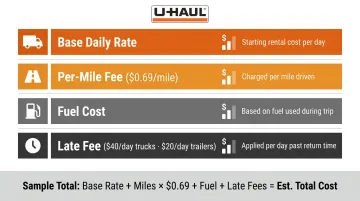
In-town rentals start at $19.95 per day plus a per-mile fee starting at $0.69 per mile. The quoted rate you see online does not include mileage, so estimate your total driving distance in and around Vista before booking.
Example: A local move using a 15-foot truck with a $29.95 daily rate and 30 miles of driving adds $20.70 in mileage fees — bringing your subtotal to $50.65 before fuel, equipment, or coverage.
Local vs. One-Way Pricing
- Local rentals: Return to the same Vista location; pay daily rate plus per-mile fee
- One-way rentals: Drop off at a different location; pay a flat rate that bundles mileage but costs significantly more per day
For most Vista-area moves, a local rental will apply. One-way rates make sense only if you're leaving the area entirely.
Late Fees Add Up Fast
U-Haul charges $40 per extra day for trucks and $20 per day for trailers. Even being a few hours late can trigger the next day's charge, so build buffer time into your Vista moving schedule. If you reserved the truck for 24 hours and return it 25 hours later, you'll pay the full $40 late fee.
The $50 "Guarantee" Isn't What It Sounds Like
U-Haul's reservation guarantee is actually a $50 credit if your equipment isn't available — not a true guarantee of your specific truck. To preserve backup options, book as early as possible and schedule morning pickup, especially during peak moving season (Thursday through Sunday).
When Shipping Beats Renting a Truck
Once you add up truck rental, mileage, and fuel, a small or partial move can cost more than you'd expect. For Vista residents moving only a handful of boxes or fragile items, it's worth comparing that total against shipping directly.
ShipMate+ (1929 W Vista Way Suite F) lets you compare rates across FedEx, UPS, and USPS in one stop, with professional packing available for fragile or high-value items. Freight options are also available for larger shipments. Call (760) 295-1074 to get a quote before committing to a truck.
Choosing the Right Truck Size for Your Vista Move
Practical Size-to-Home Breakdown
U-Haul's official size guide recommends:
- 10-foot truck: Studio or 1-bedroom apartment
- 15-foot truck: 2-bedroom apartment or small home
- 20-foot truck: 2-to-3-bedroom home
- 26-foot truck: 3-to-4-bedroom home or larger
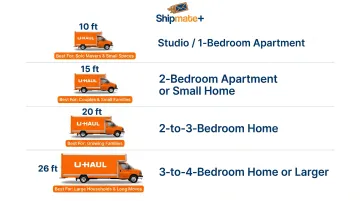
Use this as your starting point, then factor in storage units, garages, or extra furniture before confirming your booking.
The Costly Mistake of Under-Sizing
Renters under-size trucks to save $10-20 per day, then spend more in mileage and time making two trips through Vista traffic, especially near SR-78. Packing everything too tightly also increases the risk of damage. If you're between sizes, choose the larger truck.
The Hidden Costs of Over-Sizing
A truck that's too large is harder to drive, harder to park in Vista's older residential neighborhoods, and uses more fuel. Going one size above your estimate is usually fine, but two sizes above creates its own headaches. A 26-foot truck on a narrow Vista side street can cost you an hour of repositioning before you've moved a single box.
Equipment Restrictions for One-Way Moves
Once you've settled on size, confirm your move type before booking. Cargo vans, pickup trucks, and open trailers are local-move-only — they're not available for one-way rentals. Moving out of Vista entirely? You'll need a box truck (10-foot or larger).
The Fuel Policy: What to Do Before You Return the Truck
Return the Truck at the Same Fuel Level
U-Haul documents the fuel level at pickup and requires you to return the truck at the same level. If you return it with less fuel, U-Haul charges a per-gallon rate significantly above the local pump price. The exact rate is printed on your individual equipment contract (it's not publicly listed), but it's always more expensive than filling up yourself.
Return the truck below 1/4 tank and you'll owe a $30 service fee on top of the refueling surcharge.
Document the Starting Fuel Level
Note the fuel level on your contract at pickup and photograph the dashboard gauge. This habit prevents disputes at return and protects you if there's any confusion about the starting level.
Vista Gas Station Tip
Identify a gas station close to the U-Haul pickup/drop-off location on W Vista Way so you can top off right before returning the truck. Don't leave it until the last minute. Scrambling for fuel when you're already running behind adds cost and hassle you don't need.
Damage Coverage: What's Covered and What's Not
Safemove vs. Safemove Plus
U-Haul's damage coverage is optional, but declining it makes you fully financially responsible for any damage to the truck or cargo. Two coverage tiers are available:
Safemove includes:
- Damage waiver for most accidental damage (collision, overhead, tires)
- Cargo protection for loss or damage from collision, fire, windstorm, or overturn
- Medical/life coverage for driver and passengers
- Deductible: $250 for overhead damage; $150 for pickup trucks and cargo vans
Safemove Plus includes:
- Everything in Safemove
- Up to $1,000,000 in supplemental liability coverage for bodily injury or property damage claims
- Deductible: $0 for all accidental damage
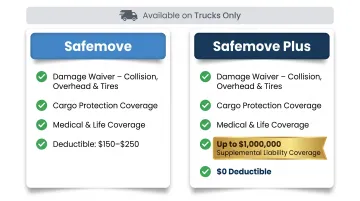
Safemove Plus is available for moving trucks only (not cargo vans or pickup trucks) and is not available in New York, New Jersey, Nevada, Louisiana, or Connecticut.
Check Your Auto Insurance and Credit Card First
Many Vista renters assume their personal auto insurance or credit card covers rental trucks. It usually doesn't. According to the Insurance Information Institute, "collision and comprehensive coverage likely will not transfer to a non-owned moving van, only to a private passenger vehicle." Most credit cards also exclude moving truck rentals due to weight and size restrictions.
Call your insurance provider and credit card company before pickup to verify coverage. If they don't cover rental trucks, Safemove or Safemove Plus is your best option.
Protect Yourself with Photos
If you decline coverage, you're responsible for all damage, including vandalism, regardless of fault. Any damage discovered at return — even pre-existing — can become a disputed issue. Before driving off, take time-stamped photos of the entire truck exterior — all sides, roof, undercarriage, and tires — so you have clear evidence of the truck's condition at pickup.
Frequently Asked Questions
What do I need to bring with me to rent a U-Haul?
Plan to bring:
- Valid government-issued driver's license
- Second form of ID (U.S. passport, military ID, or employer ID)
- Major credit or debit card for the reservation
Cash payment is accepted at return for box trucks, but cargo vans and pickup trucks require a card at pickup.
Do I have to put gas in my U-Haul before I return it?
Yes — the truck must be returned with the same fuel level noted at pickup, or U-Haul will charge a per-gallon surcharge well above pump prices plus a $30 service fee if the tank is below 1/4 full. Top off at a Vista gas station close to your return location before you drop off the truck.
Should I tip my U-Haul movers?
U-Haul itself does not handle tipping. If you hired help through U-Haul Moving Help or an independent moving labor service, tipping $20–40 per person for a standard local move is a common and appreciated gesture, though not required.
Can I rent a U-Haul in Vista without a reservation?
Walk-in rentals are possible, but availability is not guaranteed. Reserving online or by phone ensures you get the right truck size on moving day, especially during busy summer weekends in North County San Diego. Thursday through Sunday are peak rental days.
Do I need a CDL to drive a U-Haul truck?
No commercial driver's license is required. A standard driver's license is sufficient for all U-Haul moving trucks, as they are not classified as commercial vehicles.