Introduction
"International Shipment Release – Import" is a tracking status that appears when your package has cleared customs and been authorized for domestic delivery in the destination country.
If you've received this update on FedEx, UPS, or USPS and you're wondering what it means, what happens next, or why your package is still delayed — this guide explains it all.
Most people don't realize that "released" doesn't mean "delivered." There's a multi-step regulatory process behind this status, and a cleared package can still sit in a carrier facility for several more days. This guide walks you through what's happening, why delays occur, and when it's time to contact your carrier.
Key Takeaways
- International Shipment Release – Import means customs cleared your package and handed it off to the domestic delivery network
- Clearance requires document submission, duty assessment, and release authorization before your carrier resumes delivery
- Most packages clear within 1–5 business days; delays stem from missing paperwork, incorrect HS codes, unpaid duties, or random inspections
- Good sender documentation is the fastest path to clearance
- If stuck, check your tracking page for alerts and contact the carrier after 3–5 business days
What Is International Shipment Release – Import?
"International Shipment Release – Import" is a customs clearance status confirming that the destination country's customs authority has reviewed, assessed, and approved your inbound shipment. From this point, the package has legally entered the country and is no longer under customs hold.
The carrier now has full control for last-mile delivery — your package effectively moves as a domestic shipment from here on.
How this differs from related statuses:
| Status | Meaning |
|---|---|
| International Shipment Release – Import | Customs-cleared; moving to delivery |
| In Customs or Clearance in Progress | Still under customs review |
| Held by Customs | Action required; shipment cannot proceed |
If your status shows "Held by Customs," that's the one requiring your attention — the other two just mean your package is moving through the process.
How the International Shipment Release Process Works
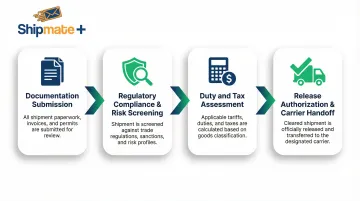
A shipment must pass through four sequential checkpoints before the carrier can deliver it domestically: documentation submission, regulatory compliance check, duty and tax assessment, and release authorization.
Step 1: Documentation Submission
The shipper or freight forwarder must submit essential paperwork to customs — either directly or via the carrier's automated systems. Required documents include:
- Commercial invoice
- Packing list
- Bill of lading or airway bill
- Certificate of origin (when applicable)
Incomplete or inaccurate paperwork is the most common cause of customs delays. Missing commercial invoices, vague product descriptions, or incorrect HS codes prevent customs from assessing duties or verifying admissibility. Carriers hold shipments until they receive all required information.
Step 2: Regulatory Compliance and Risk Screening
Customs authorities — often assisted by AI-driven carrier systems — screen declared goods against import restrictions, prohibited item lists, and trade compliance rules. The U.S. Customs and Border Protection (CBP) uses the Automated Targeting System (ATS) to screen every shipment. It cross-references cargo data against law enforcement databases, flagging anything that matches established risk profiles.
Packages may be flagged for manual inspection if:
- The shipment matches risk profiles
- Documentation inconsistencies are detected
- Partner Government Agencies (FDA, USDA) require additional permits
Step 3: Duty and Tax Assessment
Customs calculates applicable import duties and taxes based on:
- Declared value
- HS (Harmonized System) code classification
- Applicable trade agreements
The shipment cannot be released until these charges are paid by the importer or confirmed as exempt. One recent change affects nearly every inbound package: the elimination of the $800 de minimis exemption in August 2025 means all U.S.-bound shipments now face formal or informal entry and duty assessment, regardless of value.
Step 4: Release Authorization and Handoff to Carrier
Once all checks pass and duties are settled, customs issues an official release order (now issued digitally in most cases). The carrier (FedEx, UPS, USPS) receives authorization to move the package into domestic last-mile delivery. This is when the "International Shipment Release – Import" status appears on your tracking page.
Shipping through an authorized outlet like ShipMate+ — a FedEx Authorized Ship Center, UPS Authorized Shipping Outlet, and USPS Approved Shipper — means your shipment enters these carrier systems with properly formatted documentation, which reduces the chance of errors at Step 1.
Why International Shipments Get Held or Delayed
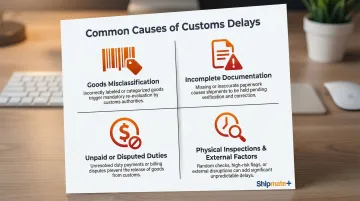
Misclassification of Goods
Using the wrong HS code is one of the most common triggers for customs holds. The Harmonized System code determines duty rates, import eligibility, and regulatory requirements. Even a minor code error can result in a 24–72 hour delay or penalty, as customs may believe the shipment falls under import restrictions or should attract different duty rates.
Incomplete or Inconsistent Documentation
Customs authorities compare the commercial invoice, packing list, and declared value for consistency. Discrepancies trigger manual review and potential holds:
- Mismatched item descriptions
- Declared values that appear undervalued
- Missing required fields (buyer/seller details, country of origin)
Unpaid or Disputed Duties and Taxes
If the importer hasn't set up a duty payment method with the carrier, or disputes the assessed amount, the shipment remains in "pending release" until payment is confirmed.
With the August 2025 elimination of the de minimis exemption, all shipments now require duty assessment, which has sharply increased the volume of parcels held for payment.
Random and Targeted Physical Inspections
Customs agencies can inspect any shipment. Some are random; others stem from risk profiling based on:
- Country of origin
- Commodity type
- Shipper history
These inspections can add several business days even when all paperwork is correct.
External Factors Beyond Shipper Control
Peak season congestion, geopolitical events, newly imposed tariffs, and staffing limitations at ports of entry can delay release for fully compliant shipments. During the 2025 Q4 holiday season, the parcel sector delivered approximately 2.3 billion parcels — a 5% year-over-year increase. That kind of volume strains customs processing and delays even compliant shipments.
What To Do When Your Package Is Stuck in International Shipment Release
Check the Carrier's Tracking Page First
Look for alerts, exception messages, or action items. Carriers like FedEx and UPS often post specific instructions — "Importer action required," "Duties payment needed" — directly on the tracking page when customs intervention is needed.
Contact the Carrier After 3–5 Business Days
If no alert appears but the package has shown the same status for more than 3–5 business days, call the carrier's international customer service line. Have your tracking number ready and ask specifically:
- Whether customs has flagged the shipment
- Whether any documentation or payment is outstanding
Carrier resolution portals:
| Carrier | Portal | How It Works |
|---|---|---|
| FedEx | FedEx Import Tool (FiT) | Email/SMS notification with 48-hour secure link to upload documents and pay duties |
| UPS | UPS Pay Now | Yellow banner on tracking page; click to pay charges and avoid $12 COD fee |
| USPS | PS Form 3849 | Postal carrier collects duties at delivery or leaves redelivery notice |
Consider a Customs Broker for Complex Issues
For high-value shipments, business imports, or formally held packages, a licensed customs broker can act on your behalf to:
- Resolve classification disputes
- Submit missing documents
- Negotiate release
This differs from the carrier's brokerage service and is often the right call for complex regulatory holds. Not every hold is yours to resolve, though — some issues originate on the export side.
When Only the Sender Can Fix the Problem
Certain holds — such as missing certificates of origin or export licenses — only the original shipper can resolve. If the carrier indicates a documentation issue on the export side, contact the sender immediately.

Key Documents for Smooth Import Release
Core Required Documents
Commercial Invoice (required for all international shipments with commercial value):
- Buyer and seller details (full names and addresses)
- Detailed product descriptions (not "gift" or "electronics")
- Quantities and weights
- Purchase price / declared value in USD
- Country of origin
- HS tariff code
Packing List:
- Item-by-item inventory
- Quantities, weights, dimensions
Bill of Lading or Airway Bill:
- Carrier-issued transport document with tracking and routing details
Certificate of Origin:
- Required for preferential duty treatment under trade agreements
The Critical Importance of HS Code Classification
The Harmonized System code determines duty rates, import eligibility, and regulatory requirements. A correctly classified shipment:
- Moves faster through customs
- Pays the correct duties
- Avoids unnecessary holds
Senders should verify codes before shipping using official customs tariff databases (such as the U.S. International Trade Commission's HTSUS) or by consulting their carrier.
Document Preparation Happens Before Shipping
The single most effective way to prevent release delays is for the sender to prepare complete and accurate documentation at the point of origin. If you're shipping internationally from Vista, CA, ShipMate+ can help you choose the right carrier — FedEx, UPS, or USPS — and ensure your package is properly packed and routed before it leaves your hands. Getting those details right at drop-off reduces the risk of holds or delays downstream.
Frequently Asked Questions
What does international shipment import release mean?
It's a tracking status indicating customs has reviewed and cleared the shipment. The package is now authorized to continue through the carrier's domestic delivery network and should arrive within the standard delivery timeframe for your area.
How long does shipment release take?
Most compliant international shipments clear customs within 1–5 business days. The timeline varies based on destination country, shipment type, documentation accuracy, and current customs workload. Clearance can range from hours to weeks in extreme cases.
How long can customs hold my package internationally?
There's no universal maximum — customs can hold a package indefinitely for compliance issues, unpaid duties, or legal holds. In the U.S., goods not cleared within 15 days may be moved to a warehouse and auctioned after 6 months. Carriers usually notify importers of any required action within a few business days.
Why is my package stuck in international shipment release?
Common causes include incomplete or incorrect documentation, unpaid import duties, random physical inspection, or a mismatch between declared value and actual goods. Check your tracking page for carrier alerts indicating what action is required.
Do I need to pay duties before my package is released?
Yes, if duties are assessed, your shipment won't be released until payment is made. The carrier notifies the recipient with a payment request, and some carriers offer pre-payment options at the time of shipment.
What documents does a sender need to include for international shipping?
Senders need a commercial invoice, packing list, airway bill or bill of lading, and (where applicable) a certificate of origin — all accurate and consistent with the physical contents to avoid customs delays.
ShipMate+ in Vista, CA handles international shipping through FedEx, UPS, and USPS, including customs documentation support to keep your packages moving. Stop by at 1929 W Vista Way Suite F, Vista, CA 92083, or call (760) 295-1074.