Introduction
Trying to ship a large pallet of equipment, a set of industrial shelves, or oversized machinery across California? Standard FedEx parcel services won't accept it, and that's where FedEx Freight comes in. This guide covers everything California shippers need to know about FedEx Freight service centers—how to locate them, what qualifies for freight shipping, how to schedule pickups, and when a local authorized ship center can handle your needs instead.
One thing worth knowing before you book: FedEx Freight is undergoing a major corporate change, with plans to become an independent publicly traded LTL carrier (ticker: FDXF) by June 1, 2026. The California service network remains fully operational through this transition—no changes to terminal locations, access, or service levels for shippers.
TLDR:
- FedEx Freight handles shipments over 150 lbs or exceeding 165 inches in length and girth—too large for standard FedEx parcel services
- California has extensive FedEx Freight terminal coverage in LA, San Diego, Bay Area, Sacramento, Fresno, and Bakersfield
- Schedule pickups online at fedex.com, by phone, or through a freight broker—no terminal visit required
- Track freight shipments using PRO numbers at fedex.com, separate from standard FedEx tracking
- For standard parcel shipping in Vista or North San Diego County, ShipMate+ is a FedEx Authorized Ship Center with drop-off, packing, and multi-carrier options
What Is FedEx Freight (and How Is It Different from Regular FedEx)?
The Two-Network System
FedEx operates two completely separate shipping networks that confuse many first-time freight shippers. FedEx (the parcel network) handles standard packages through FedEx Ground, FedEx Express, and FedEx Home Delivery for items within specific weight and size limits. FedEx Freight is a distinct division designed exclusively for large, heavy, or palletized shipments that exceed parcel carrier thresholds.
You cannot drop a 300-pound pallet at a FedEx Office location—it must go through the freight network.
Official Weight and Size Thresholds
FedEx establishes clear thresholds that determine when shipments must move to the freight network:
- Weight limit: Shipments over 150 lbs require FedEx Freight
- Dimensional limit: Items exceeding 165 inches in combined length and girth must ship as freight
- Length limit: Packages over 108 inches long (FedEx Ground) or 119 inches (FedEx Express) trigger freight handling
These limits exist because parcel sorting facilities cannot safely or efficiently process oversized or heavy items. Attempting to ship freight-weight items through the parcel network results in rejection or heavy oversize surcharges.
What Is LTL Freight?
LTL stands for Less-Than-Truckload—shipments too large for parcel services but not large enough to fill an entire truck. FedEx Freight specializes in LTL shipping, where multiple shippers share trailer space. Your pallet of machinery might ride alongside another company's construction materials, making it considerably cheaper than booking a dedicated truck.
FedEx Freight Priority vs. Economy
Once you know your shipment qualifies as LTL, the next decision is speed.
FedEx Freight offers two service tiers:
- FedEx Freight Priority: Faster transit times (typically 1-3 days), ideal for time-sensitive shipments requiring the fastest published LTL transit in the industry
- FedEx Freight Economy: Cost-effective option (typically 3-6 days) when you can trade speed for savings
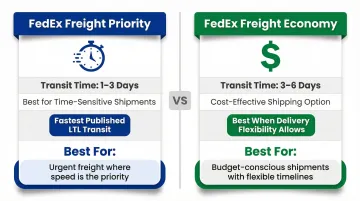
Transit times are estimates, not guarantees. For a confirmed delivery window, you'll need to add a time-definite service like A.M. Delivery or Close of Business Delivery at booking.
The 2026 Spinoff
FedEx Corporation is spinning off its freight division into an independent publicly traded company. The new entity will trade under ticker symbol FDXF starting June 1, 2026. For California shippers, all service centers, pickup schedules, and service levels remain identical through the transition.
FedEx Freight Services Available in California
Why California Has Extensive Coverage
California ranks as one of the most heavily served states in the FedEx Freight network due to its population density, manufacturing base, and role as a major trade gateway. The San Pedro Bay port complex (Port of Los Angeles and Port of Long Beach) handles approximately 31% of all U.S. containerized waterborne trade, creating massive freight volumes that require robust LTL infrastructure across both Northern and Southern California.
Core LTL Services
FedEx Freight offers California shippers several essential services:
- Standard LTL pickup and delivery: Driver picks up palletized freight from your location and delivers to the consignee
- Liftgate service: Required when pickup or delivery locations lack a loading dock (maximum 4,000 lbs per pallet)
- Residential delivery: FedEx Freight Direct service delivers to homes with options ranging from basic ground-level delivery to premium two-person room-of-choice service
- Inside delivery: Driver brings freight inside the building, past the truck's accessible point
- Appointment scheduling: Coordinate specific delivery windows with the recipient
Understanding Freight Class
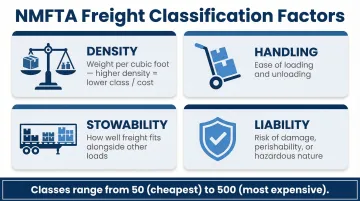
Freight class affects your shipping cost directly. The National Motor Freight Traffic Association (NMFTA) assigns freight classes from 50 to 500 based on four factors:
- Density: Weight per cubic foot — higher density means a lower class and lower cost
- Handling: Ease or difficulty of loading and unloading the shipment
- Stowability: How well the freight fits alongside other loads in a trailer
- Liability: Risk of damage, perishability, or hazardous characteristics
A dense pallet of machine parts might qualify as Class 85, while lightweight furniture could be Class 125. Misclassifying freight triggers billing adjustments and delays — use FedEx's LTL Freight Classification Tool or the NMFTA's ClassIT+ tool before booking.
California Compliance Surcharge
FedEx applies a California Compliance Surcharge (Tariff Item 748) to all shipments moving to, from, or within the state. This covers the cost of regulatory compliance specific to California's transportation and environmental regulations.
Common California Use Cases
California's diverse economy means FedEx Freight serves a wide range of industries. Common use cases include:
- Manufacturing facilities shipping machinery and industrial equipment
- Retail distribution centers moving palletized inventory
- Construction companies transporting building materials and tools
- Electronics manufacturers shipping server racks and data center equipment
- Furniture retailers delivering large items to showrooms
- Agricultural equipment suppliers moving irrigation systems and farm machinery
How to Find FedEx Freight Locations in California
Use the Official Location Finder
The most reliable way to find FedEx Freight service centers is through the official FedEx Freight location finder. This tool provides current terminal addresses, hours, and contact information.
Critical filtering tip: When using the general FedEx location finder at fedex.com/locate, you must filter specifically for "FedEx Freight" service centers. Most FedEx locations—including FedEx Office stores and FedEx Authorized Ship Centers—do not accept freight shipments. FedEx Office locations have a strict 150-lb weight limit, and most authorized ship centers handle parcels only.
Major California Metro Areas with FedEx Freight Terminals
California has substantial FedEx Freight coverage across major population centers:
Southern California:
- Los Angeles (Downtown): 2045 E Washington Blvd, Los Angeles, CA 90021
- South Los Angeles: 14037 Garfield Ave Suite D, Paramount, CA 90723
- San Diego: 5550 Eastgate Mall, San Diego, CA 92121
- North San Diego (Vista): 1392 Engineer Street, Vista, CA 92081
- Inland Empire (San Bernardino): 1 Leland Norton Way, San Bernardino, CA — verify current address via locator
- Bakersfield: 6100 District Blvd, Bakersfield, CA 93313
Northern California:
- San Francisco Bay Area (Hayward): 29001 Hopkins St, Hayward, CA 94545
- Sacramento (West Sacramento): 4075 Channel Dr, West Sacramento, CA 95691
- Fresno: 4574 S Maple Ave, Fresno, CA 93725
Important: Terminal addresses occasionally change due to facility relocations or consolidations. Always verify the current address using the official locator before visiting.
Understanding Service Center Operations
FedEx Freight service centers are commercial/industrial terminals, not retail storefronts. What to expect:
- Dock-level access: Most terminals require you to back up to a loading dock
- Commercial hours: Typically weekday business hours; call ahead to confirm
- Bill of Lading required: You must present proper freight documentation (more on this below)
- Palletized freight preferred: Loose items should be properly packaged or palletized
Pickup Scheduling Eliminates Terminal Visits
Given the dock requirements and commercial-only hours above, most California businesses never visit a freight terminal at all. Instead, they schedule FedEx Freight to pick up directly from their location—whether a warehouse, retail store, or even a residence. You can book pickups online at fedex.com, by calling FedEx Freight customer service, or through a freight broker.
For Vista-area shipments that fall under freight thresholds, ShipMate+ at 1929 W Vista Way offers FedEx parcel drop-off and pickup scheduling as an authorized FedEx ship center—no loading dock required.
What to Expect at a FedEx Freight Service Center
The Bill of Lading (BOL) Requirement
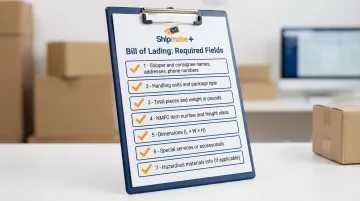
Every freight shipment requires a Bill of Lading—a legal document that acts as the contract of carriage, receipt for goods, and the basis for calculating charges. Shippers are responsible for generating an accurate BOL that includes:
- Shipper and consignee names, addresses, and phone numbers
- Handling units (pallets, crates, boxes) and package type
- Total pieces and weight in pounds (including packaging and pallets)
- NMFC item number and freight class
- Dimensions (length × width × height)
- Special services or accessorials (liftgate, inside delivery, residential, limited access)
- Hazardous materials information and emergency contact (if applicable)
While you can create domestic LTL labels online, paper BOLs are still required for hazmat shipments, international freight, and shipper's load and count shipments.
Drop-Off Process
If you choose to drop freight at a terminal rather than schedule pickup:
- Arrive during posted dock hours (call ahead to confirm)
- Present your completed Bill of Lading to terminal staff
- Back your vehicle to the assigned dock door
- Unload freight (terminal staff typically assist with forklifts if freight is palletized)
- Obtain a stamped copy of the BOL as your receipt
Scheduling a Pickup Instead
Scheduling a pickup means FedEx Freight drivers come to you with the right equipment already on the truck. Key advantages include:
- No need to transport freight to a terminal yourself
- Liftgate service available for ground-level or residential pickups
- Standard dock-height trailers for commercial locations with loading docks
- Useful for businesses that don't have their own dock equipment
Tracking with PRO Numbers
FedEx Freight assigns a unique 12-digit PRO number to each handling unit (pallet, crate, etc.) in your shipment. Unlike a single parcel tracking number, each pallet or crate gets its own PRO number — so you can monitor individual handling units as they move through the network. Enter any PRO number at fedex.com/tracking to see pallet-level status updates.
How to Schedule a FedEx Freight Shipment in California
Three Booking Methods
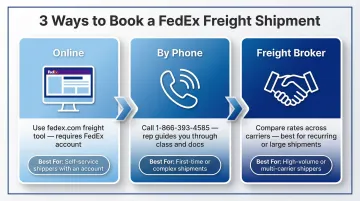
Online: Use the FedEx Freight shipping tool at fedex.com. Requires a FedEx account — best if you already know your freight class and documentation requirements.
By phone: Call FedEx Freight customer service at 1-866-393-4585. Representatives can guide you through freight class, weight, and documentation requirements if you're unsure.
Through a freight broker: Services like LTL Select (or any freight broker) compare rates across multiple carriers, including FedEx Freight, which can save time and money on larger or recurring shipments.
Information Needed for Accurate Quotes
To get a freight quote and schedule pickup, gather:
- Origin and destination ZIP codes: Intrastate California shipments often transit faster than cross-country freight
- Weight and dimensions: Total weight in pounds and dimensions (L × W × H) for each handling unit, including pallets and packaging
- Freight class: Use the NMFTA ClassIT+ tool or FedEx classification tool if unsure
- Pallet count and type: Number of pallets and whether they're standard 48" × 40" pallets
- Special handling needs: Liftgate service, residential pickup/delivery, inside delivery, limited access locations, appointment scheduling
- Preferred pickup date: When you want FedEx Freight to collect the shipment
Transit Time Estimators
Once you have your quote details ready, transit time is the next natural question. Times vary based on origin, destination, and service level selected.
Use the FedEx Freight transit time estimator during the quoting process to see expected delivery windows. You can also view color-coded transit maps for specific service centers to understand typical delivery timelines from California terminals.
Note for intrastate shipments: Freight moving within California — Los Angeles to San Francisco, for example — often delivers faster than the standard 1-3 day Priority or 3-6 day Economy windows, due to shorter distances and direct routing.
Need FedEx Shipping in Vista or North San Diego County?
When Freight Isn't the Answer
Most shipments don't require a freight terminal. If your package is under 150 lbs, a local FedEx Authorized Ship Center handles it faster and with less hassle — offering drop-off, professional packing, and multi-carrier options all in one stop.
ShipMate+ in Vista: Your Local FedEx Authorized Ship Center
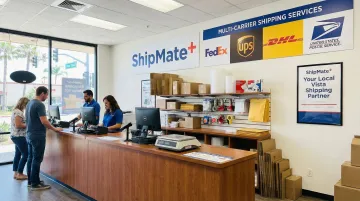
ShipMate+ serves Vista and North San Diego County as a FedEx Authorized Ship Center offering comprehensive shipping services under one roof. Located at 1929 W Vista Way Suite F, Vista, CA 92083, ShipMate+ provides:
- Drop off FedEx Express, Ground, and International shipments with daily pickups (Mon–Fri 4:30 PM, Sat 12:00 PM)
- Pack fragile, high-value, and oddly shaped items with a team that uses custom box sizing and protective materials
- Compare rates across FedEx, UPS, and USPS at a single counter — no separate trips
- Choose from 20+ box sizes, bubble wrap, packing peanuts, heavy-duty tape, and padded envelopes
Hours:
- Monday-Friday: 9:00 AM – 6:00 PM
- Saturday: 9:00 AM – 1:00 PM
- Sunday: Closed
Contact: (760) 295-1074 | info@shipmateplus.com
ShipMate+ is a practical stop for residents and businesses across Vista, Oceanside, Carlsbad, San Marcos, and Escondido. For shipments that do cross into freight territory, the team can also walk you through LTL preparation and documentation.
Frequently Asked Questions
Is there a difference between FedEx and FedEx Freight?
Yes. FedEx (the parcel network) handles standard packages and express shipments under 150 lbs through FedEx Ground, Express, and Home Delivery. FedEx Freight is a separate division for large, heavy, or palletized LTL shipments exceeding parcel limits. Not all FedEx locations accept freight.
What are FedEx Freight services?
FedEx Freight offers LTL pickup and delivery with two service tiers: FedEx Freight Priority (1–3 days) and FedEx Freight Economy (3–6 days). Additional services include liftgate, residential delivery, inside delivery, appointment scheduling, and specialized handling for oversized or heavy items.
What qualifies for FedEx Freight?
Shipments over 150 lbs, items exceeding 165 inches in length and girth, or palletized cargo qualify for FedEx Freight. Items too large or heavy for standard parcel sorting equipment must move through the freight network to avoid rejection or oversize surcharges.
How to schedule a FedEx Freight shipment?
Book online at fedex.com (requires a FedEx account), call FedEx Freight at 1-866-393-4585, or use a freight broker. Have your shipment weight, dimensions, freight class, origin/destination ZIP codes, and special handling requirements ready.
Can I drop off a FedEx Freight shipment at any FedEx location?
No. FedEx Freight must be dropped at a dedicated FedEx Freight service center or scheduled for pickup. FedEx Office stores and most FedEx Authorized Ship Centers handle parcels only, with a 150-lb weight limit. Use the official locator to find freight-enabled terminals.
How do I track a FedEx Freight shipment?
Track FedEx Freight using the PRO number assigned at booking. Enter the 12-digit PRO number at fedex.com/tracking to get pallet-level status updates.