
Introduction
Shipping costs continue to climb year after year, and the impact is real. Nearly 40% of online shoppers abandon their carts due to high shipping fees, according to Baymard Institute's 2026 research. With FedEx and UPS raising rates by 5.9% and USPS adding an 8% temporary surcharge in 2026, choosing the wrong carrier can cost you more than you realize.
There's no single cheapest carrier for every package. The right choice depends on weight, dimensions, destination, and delivery speed. This guide breaks down how each major carrier prices shipments, where flat-rate options save money, and how to compare rates before you pay.
Key Takeaways
- USPS Ground Advantage is almost always cheapest for packages under 1 lb
- USPS and UPS Ground Saver compete closely for packages between 1–10 lbs
- FedEx Ground typically offers the lowest rates for packages over 20 lbs
- Your final rate hinges on three factors: dimensional weight, shipping zone, and how fast it needs to arrive
How Much Does It Cost to Ship a Package?
Shipping costs vary widely based on carrier, service level, package characteristics, and destination. The mistake most shippers make is defaulting to one carrier out of habit, underestimating dimensional weight charges, or choosing faster services than they actually need. Each of these errors can cost you $10–$30 or more per shipment.
Typical Shipping Cost Ranges by Service Level
Economy/Ground Shipping (3–5 Business Days)
Ground shipping is the cheapest option for non-urgent deliveries. For a 1 lb package traveling a short distance (Zone 2):
- USPS Ground Advantage: $8.35
- UPS Ground: $11.32
- FedEx Ground: $11.99
USPS Ground Advantage offers the lowest rates for lightweight packages — the go-to choice for small e-commerce shipments and personal packages.
2–3 Day Shipping
If ground is too slow but overnight is overkill, these mid-tier services close the gap:
- USPS Priority Mail: $10.10 (1 lb, Zone 2)
- FedEx Express Saver: $31.48 (1 lb, Zone 2)
- UPS 3 Day Select: $43.43 (1 lb, Zone 2)
USPS Priority Mail runs $20–$30 cheaper than commercial carriers for packages under 10 lbs — a meaningful difference if you're shipping frequently.
Overnight/Next-Day Shipping
Express overnight services cost 3–5x more than ground and should only be used when absolutely necessary:
- USPS Priority Mail Express: $31.40 (0.5 lb)
- FedEx Standard Overnight: $55.00 (1 lb, Zone 2)
- UPS Next Day Air Saver: $40.40 (1 lb, Zone 2)
Special Low-Cost Options
Two USPS programs stand out for specific situations:
- USPS Media Mail — Starting at $4.47. Strictly limited to books, CDs, DVDs, and educational materials
- USPS Priority Mail Flat Rate Boxes — One price regardless of weight (up to 70 lbs), best for dense or heavy items going long distances:
- Small Flat Rate Box: $10.65
- Medium Flat Rate Box: $19.15
- Large Flat Rate Box: $26.30
Key Factors That Affect Your Shipping Cost
Carriers use a combination of physical and logistical variables to calculate rates. Know these variables upfront and you can avoid surprise charges that inflate your total cost by 20–40%.
Package Weight and Dimensional Weight (DIM)
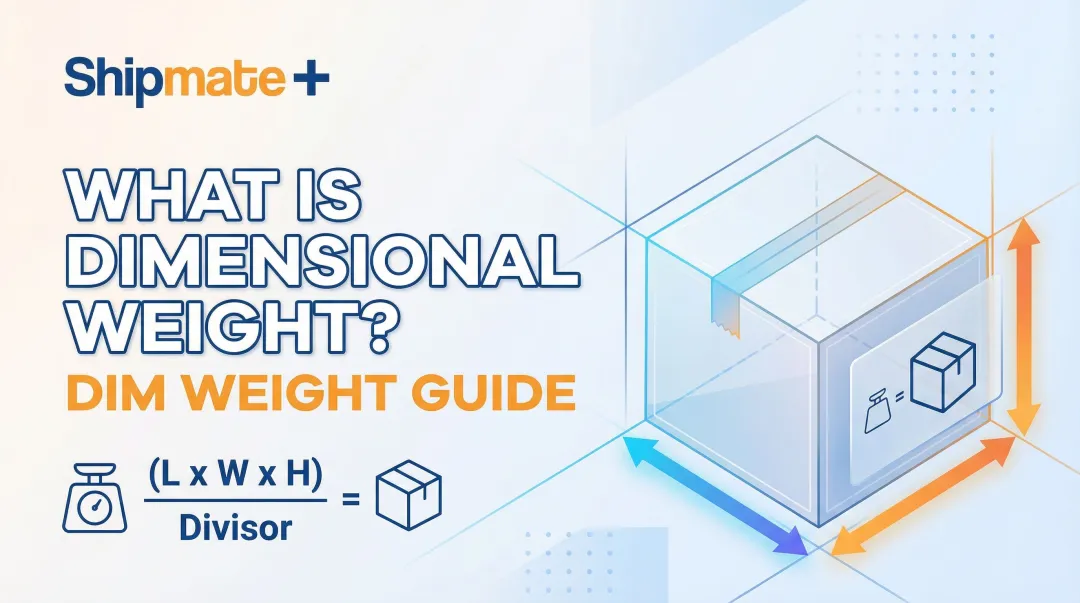
Carriers charge based on whichever is greater: actual weight or dimensional weight. Dimensional weight is calculated as:
Length × Width × Height ÷ DIM Divisor
Current DIM divisors:
- USPS: 166 (applies only to parcels exceeding 1 cubic foot)
- UPS: 166 for Retail Rates; 139 for Daily Rates
- FedEx: 139
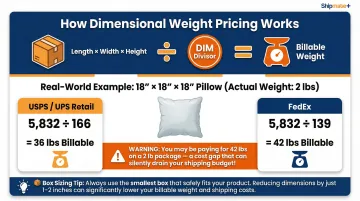
Real-world example: An 18" × 18" × 18" pillow weighs 2 lbs physically but calculates to:
- USPS/UPS Retail: 5,832 cubic inches ÷ 166 = 36 lbs billable weight
- FedEx: 5,832 cubic inches ÷ 139 = 42 lbs billable weight
This means you'd pay for a 36–42 lb package even though it only weighs 2 lbs. Always use the smallest box that safely fits your item to minimize dimensional weight charges.
Shipping Zones and Distance
USPS uses Zones 1 through 9 based on the distance between origin and destination ZIP codes. UPS and FedEx use similar zone-based pricing. Higher zone numbers mean higher rates.
Zone impact example (1 lb package):
- USPS Ground Advantage Zone 2: $8.35
- USPS Ground Advantage Zone 8: $9.45
- FedEx Ground Zone 2: $11.99
- FedEx Ground Zone 8: $15.40
Shipping from a centrally located origin or using a local shipping store near a major carrier hub can sometimes reduce zone costs.
Delivery Speed
Faster delivery means significantly higher costs. Consider this comparison for a 5 lb package traveling across the country (Zone 8):
- FedEx Ground: $22.79
- FedEx Standard Overnight: $186.88
Choosing overnight over ground increases your cost by over 700%. Opting for ground shipping instead of express typically saves $10–$30 per package depending on weight and distance. Speed is the single biggest cost lever you control — but it's not the only one. Carrier surcharges can quietly add just as much to your final bill.
Additional Fees to Watch For
Carriers often exclude these fees from initial quoted rates, so the price you see first rarely reflects what you'll actually pay:
| Fee Type | USPS | UPS | FedEx |
|---|---|---|---|
| Residential Delivery | $0 (included) | $6.10 | $6.45 |
| Fuel Surcharge | $0 (none) | Weekly % | Weekly % |
| Saturday Delivery | $0 (included) | $4.00–$16.00 | $16.00 |
| Adult Signature | $8.40 | $8.70 | $8.65 |
| Insurance (per $100) | $2.70+ | $1.60 | $1.50 |
Add two or three of these to a single shipment and you're looking at $15–$30 in extras on top of the base rate. Always request a total cost breakdown — not just the base rate — before committing to a carrier.
Cheapest Carrier for Every Shipping Need: USPS vs. UPS vs. FedEx
No single carrier wins on price in every situation — the right choice depends on your package's weight, distance, and delivery speed.
Best for Lightweight Packages (Under 1 lb)
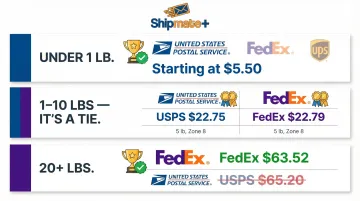
USPS is the clear winner for packages under 1 lb:
- USPS Ground Advantage: Starting at $5.50 (0.5 lb, Zone 4)
- USPS First Class Mail: Similar pricing for very light packages
If your contents qualify (books, CDs, DVDs, educational materials), USPS Media Mail at $4.47 is the absolute cheapest option available.
Best for Mid-Weight Packages (1–20 lbs)
For 1–10 lb packages, USPS Ground Advantage and UPS Ground Saver compete closely:
5 lb package, NY to LA (Zone 8):
- USPS Ground Advantage: $22.75
- FedEx Ground: $22.79
USPS and FedEx are virtually identical in price for 1–10 lb shipments. For 10–20 lb packages, UPS and FedEx become more competitive, often undercutting USPS by $2–$5.
Best for Heavy Packages (20 lbs and Above)
FedEx Ground typically offers the lowest rates for packages over 20 lbs:
20 lb package (Zone 8):
- FedEx Ground: $63.52
- USPS Ground Advantage: $65.20
50 lb package (Zone 8):
- FedEx Ground: $121.21 (UPS Ground rates vary by account; FedEx consistently leads at this weight)
UPS Ground stays competitive in the 20–30 lb range, but FedEx pulls ahead at heavier weights.
Best for Speed-Sensitive Shipments
The fastest option isn't always the most expensive — it depends on weight:
2–3 day delivery:
- Under 10 lbs: USPS Priority Mail saves $15–$25 over UPS and FedEx
- Over 10 lbs: UPS and FedEx become more price-competitive
Overnight delivery:
- FedEx Standard Overnight and UPS Next Day Air Saver are generally cheaper than USPS Priority Mail Express across most package weights
In Vista, CA, ShipMate+ lets you compare and ship with all three carriers — USPS, UPS, and FedEx — under one roof, with no post office lines.
Practical Ways to Lower Your Shipping Costs
A few consistent habits can meaningfully cut what you spend on every shipment. Here's where to start.
Right-Size Your Packaging
Using a box that's too large increases dimensional weight and costs more. Always pack in the smallest box that safely protects the item. Consider these strategies:
- Measure your item before selecting a box
- Use boxes designed for specific items (laptop boxes, artwork boxes)
- Remove unnecessary interior packaging that adds bulk
- Flatten items when possible without compromising protection
Use Flat-Rate Options Strategically
USPS Priority Mail Flat Rate boxes charge one price regardless of weight (up to 70 lbs), making them ideal for dense, heavy items traveling across many zones.
When flat rate beats weight-based pricing:
- Heavy item (10+ lbs) traveling long distance (Zone 5+)
- Dense products like books, tools, or machine parts
- Shipping to Alaska, Hawaii, or Puerto Rico
When flat rate doesn't make sense:
- Light items under 5 lbs
- Short-distance shipments (Zones 1-3)
- Large but lightweight packages (dimensional weight applies to regular pricing but not flat rate)
Compare Rates Before Every Shipment
Rates vary significantly by carrier, service, and package details. At an authorized shipping outlet like ShipMate+, staff can compare FedEx, UPS, and USPS rates side by side for your specific package — no need to visit multiple locations or juggle carrier websites.
Look for Free Carrier-Provided Packaging
USPS offers free Priority Mail and Priority Mail Express boxes. Using these eliminates box costs and locks in flat-rate pricing . You can order free USPS boxes online or pick them up at any post office or authorized USPS shipper.
What Most People Get Wrong About Shipping Costs
Focusing Only on the Base Rate
The sticker price is rarely the total cost. Residential surcharges, fuel surcharges, and signature fees can add $5–$15+ to any shipment. Always ask for a total landed cost estimate that includes all fees, not just the base shipping rate.
Sticking to One Carrier Out of Habit
Many people use the same carrier every time without comparing, even when another carrier is significantly cheaper. For example, shipping a 5 lb package from New York to Los Angeles via USPS Ground Advantage costs $22.75. That same package via UPS Ground runs approximately $25–$28 once residential and fuel surcharges are included — a 10–20% difference that compounds fast.
Ignoring Packaging Choices
Dimensional weight pricing means bulky boxes cost more than their actual weight suggests — and carriers add surcharges on top when packages exceed size thresholds:
- USPS charges oversized pricing on parcels where combined length and girth exceeds 108 inches (up to 130 inches)
- UPS applies a Large Package Surcharge when length plus girth exceeds 130 inches or length alone exceeds 96 inches, with a 90 lb minimum billable weight
- FedEx adds an Oversize Charge for packages exceeding 96 inches in length or 130 inches in length and girth, also subject to a 90 lb minimum billable weight
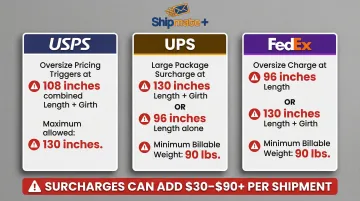
These surcharges can add $30–$90+ to a single shipment. Right-sizing your box before you ship is one of the easiest ways to avoid fees that dwarf your base rate.
Frequently Asked Questions
What is the cheapest shipping method?
USPS Ground Advantage and USPS First Class Mail are the cheapest standard options for most packages under 10 lbs. USPS Media Mail is the absolute cheapest service at $4.47, but it's strictly limited to books, CDs, DVDs, and educational materials.
How can I ship freight cheaply?
Freight shipping applies to very large or heavy shipments exceeding standard carrier limits (typically over 150 lbs). Compare freight broker quotes, consolidate shipments when possible, and use LTL (less-than-truckload) services to share truck space with other shippers and reduce costs.
Is USPS, UPS, or FedEx cheaper for small packages?
USPS is typically cheapest for packages under 1 lb. USPS and UPS are competitive for 1–10 lb packages, with differences often less than $1–$2. FedEx usually wins for packages above 20 lbs, where their pricing structure becomes more competitive.
What is dimensional weight and how does it affect my shipping cost?
Dimensional (DIM) weight is calculated from package volume (Length × Width × Height ÷ DIM Divisor). Carriers charge whichever is higher—actual or dimensional weight—meaning a light but large package can cost far more to ship than expected.
What's the cheapest way to ship a heavy package?
FedEx Ground and UPS Ground are generally the most cost-effective for packages over 20 lbs. USPS Priority Mail Flat Rate boxes can also offer savings for very dense heavy items (up to 70 lbs) traveling long distances, since they charge one flat rate regardless of weight.
How can I find the best shipping rate for my specific package?
Use each carrier's online rate calculator to compare USPS, UPS, and FedEx rates for your package dimensions and destination. You can also bring your package to ShipMate+ in Vista, CA—an authorized shipper for all three carriers—and let staff find the lowest rate for you on the spot.