Introduction
Many small businesses face a common dilemma: they need to ship goods internationally but don't have enough volume to fill an entire container. The result? Confusion about which shipping option actually saves money, time, and hassle.
Choosing between LCL (Less than Container Load) and other freight options isn't just about comparing price tags. The right call depends on several factors:
- Transit time and delivery deadlines
- Cargo type and fragility
- Shipment frequency and volume
- Risk tolerance and insurance needs
Getting it wrong can mean overpaying by thousands of dollars or facing unexpected delays that throw off your delivery schedule.
According to the U.S. Small Business Administration, small businesses account for 97% of all U.S. exporting firms, yet many struggle to navigate freight logistics efficiently. This guide covers the key factors that determine whether LCL is the right choice for your shipment, including the scenarios where a different option makes more sense.
Key Takeaways
- LCL lets multiple shippers share one container, paying only for the space used—ideal when you can't fill a full container
- Cost-effective for shipments under 15 CBM; beyond that, FCL often becomes the better deal
- Key decision factors: shipment volume, timeline sensitivity, cargo type, total cost structure, and frequency
- LCL consolidation adds 1-2 weeks to transit time, so tight deadlines may be a dealbreaker
- Proper packing is non-negotiable: LCL cargo handles more touchpoints than FCL
What Is LCL Shipping?
LCL (Less than Container Load) is a shipping method where cargo from multiple shippers is consolidated into a single ocean container. Each shipper pays only for the cubic meters (CBM) or weight they occupy—not the full container.
How LCL charges are calculated:
LCL pricing uses the "Weight or Measure" (W/M) rule. You're charged based on whichever is greater: your cargo's volume in cubic meters or its actual weight in metric tons. Carriers apply specific conversion factors—typically 1 CBM = 1,000 kg for ocean carriage—and charge a minimum of one freight ton (FRT).
Additional fees typically include origin handling, destination handling, documentation, and customs clearance, which are charged on top of the base freight rate.
Who LCL shipping is designed for:
- Small-to-medium businesses without full-container volumes
- E-commerce sellers testing new international markets
- Individuals relocating household goods overseas
- Anyone whose shipment falls below the 15 CBM threshold that would justify FCL
The LCL Consolidation Process
LCL moves through more hands than a standard shipment—which is exactly why transit times run longer than FCL. Here's each stage:
- Deliver cargo to a Container Freight Station (CFS) roughly 5-7 days before the vessel sails
- The freight forwarder consolidates multiple shipments into a single container
- The container makes its ocean crossing to the destination port
- Cargo is unstuffed at the destination CFS and sorted by recipient
- Individual shipments are dispatched for final delivery
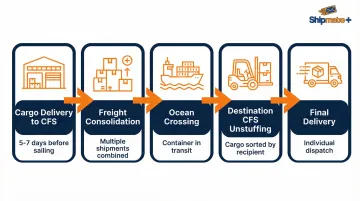
A freight forwarder or NVOCC (Non-Vessel Operating Common Carrier) manages this entire process—issuing House Bills of Lading to individual shippers and handling customs clearance. The NVOCC holds carrier liability for your cargo even though they don't operate the vessel, which matters if something goes wrong in transit.
Benefits and Drawbacks of LCL Shipping
LCL isn't a universal solution—it excels in specific scenarios and falls short in others. Understanding both sides helps you make the right call.
Key Benefits of LCL Shipping
- Pay only for the space you use: For shipments under 10 CBM, LCL is typically the most economical ocean freight option because you avoid paying for empty container space.
- Ship more frequently, carry less inventory: Smaller, more frequent orders reduce warehousing costs and free up working capital—a real advantage for businesses managing tight cash flow.
- Test new markets without big commitments: You can send trial shipments to new customers or regions without the capital outlay of full-container freight.
Key Drawbacks of LCL Shipping
Longer transit times
The consolidation and deconsolidation process typically adds 1 to 2 weeks to standard ocean transit. Your cargo waits at the origin CFS until the container fills, then sits again at the destination CFS for processing.
Increased handling and cargo risk
LCL cargo is loaded, unloaded, and sorted with other shipments multiple times. This creates a higher risk of damage or loss compared to FCL, where containers stay sealed from origin to destination. Two-thirds of cargo damage claims are caused or worsened by poor packing practices—so professional packing and cargo insurance are essential for LCL shipments.
Additional surcharges
LCL shipments carry multiple line-item fees beyond base freight:
- Origin/destination CFS handling charges
- Documentation fees for House Bills of Lading
- Customs clearance and examination fees
- VGM (Verified Gross Mass) weighing fees
- Pickup and delivery (drayage) costs
These surcharges can cut into per-unit cost savings for very small shipments. Always request a fully itemized quote to understand your total landed cost.
Key Factors to Consider When Choosing LCL Shipping
Selecting LCL isn't a simple yes/no decision—it requires evaluating several interconnected factors that affect both cost and operational outcomes. The following framework helps you connect your specific needs to the right choice.
Shipment Volume
Shipment volume (measured in CBM) is the primary driver of the LCL vs. FCL decision.
The 10-15 CBM tipping point:
Industry sources consistently place the break-even threshold between 10 and 15 CBM. Below this range, LCL is typically more cost-effective. Above it, FCL often becomes comparable or cheaper—even if you're not filling the entire container.
Here's how to apply that threshold:
- Under 10 CBM: LCL is almost always your best option
- 10-15 CBM: Get parallel quotes for both LCL and FCL before committing
- Above 15 CBM: FCL likely offers better value plus additional benefits (reduced handling, faster transit, better security)
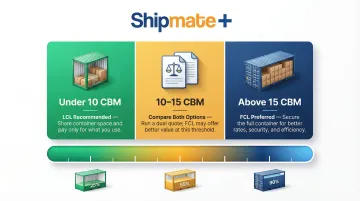
The exact threshold varies by trade lane and carrier, so always compare total landed costs for both options when you're in this volume range.
Transit Time Requirements
Once you've sized your shipment, delivery timing is the next filter. LCL involves a consolidation waiting period at origin—the container may not depart until it's full, which can add days or weeks depending on shipping frequency to your destination.
Before committing to LCL, ask yourself:
- Can your supply chain absorb 1-2 weeks of additional transit time?
- Do you have hard delivery deadlines that can't be missed?
- How frequently do consolidations depart to your destination?
Time-critical shipments may be better served by FCL (which offers guaranteed departure dates) or air freight, even at higher cost. Missing a product launch or seasonal sales window can cost far more than the freight savings from LCL.
Cargo Type and Fragility
Not all cargo is suitable for the shared environment of LCL shipping.
Well-suited for LCL:
- Non-perishable general goods
- Furniture and home goods
- Electronics (properly packed)
- Apparel and textiles
- Palletized products
Problematic for LCL:
- Reefer/cold-chain goods (standard LCL containers are dry boxes)
- Hazardous materials (strict segregation rules apply)
- Extremely fragile high-value items
- Oversized pieces exceeding CFS handling capacity
Fragile or high-value cargo shipped via LCL requires professional packing to withstand additional handling at consolidation and deconsolidation points. Working with a professional packing service before your cargo enters the LCL network significantly reduces the risk of damage in transit.
Total Cost Structure
LCL pricing has multiple components beyond the base ocean freight rate. The total landed cost can differ significantly from the headline freight quote.
Components of total LCL cost:
- Base ocean freight rate (per CBM)
- Origin CFS charges
- Documentation fees
- Destination handling fees
- Customs clearance
- Last-mile delivery
Always compare total landed cost—not just the base rate—when evaluating LCL providers. Ask carriers for a fully itemized quote to avoid invoice surprises that can exceed your budget.
Shipment Frequency and Planning
How often you ship affects your LCL strategy and negotiating power.
Businesses shipping regularly to the same destination can negotiate volume-based rate agreements with a freight forwarder—consistent volume gives you leverage that one-off shippers don't have.
If you ship sporadically, you can still reduce per-unit costs by consolidating multiple small orders into a single periodic LCL shipment rather than shipping every order individually. This is a practical approach for small e-commerce businesses managing international fulfillment without the volume to justify FCL.
LCL vs. FCL: How to Decide
Here's a practical decision framework to help you determine when LCL is the right call and when FCL makes more sense.
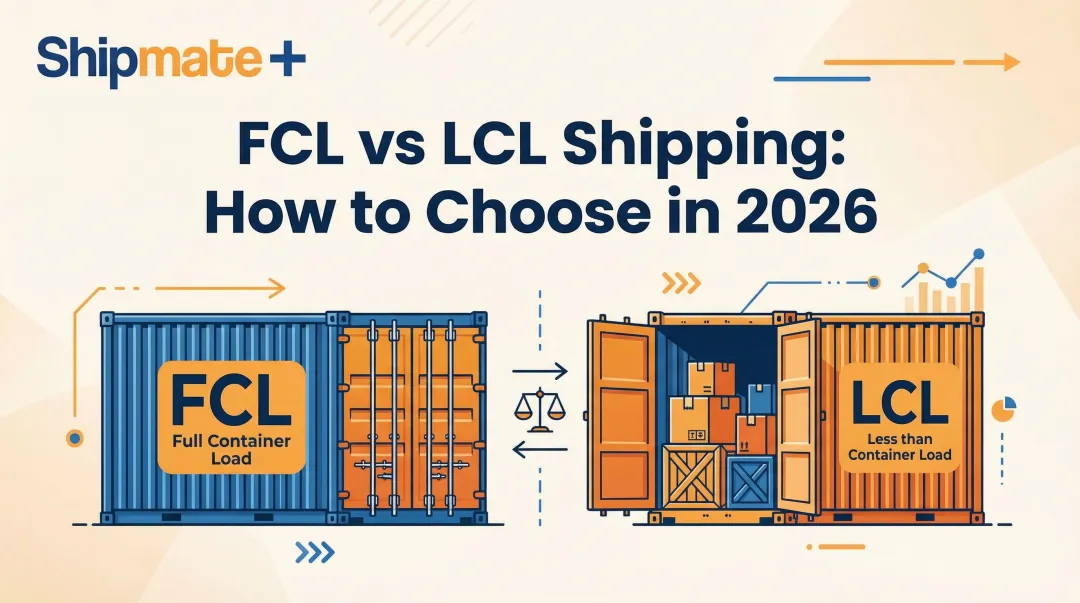
Side-by-Side Comparison
| Factor | LCL (Less than Container Load) | FCL (Full Container Load) |
|---|---|---|
| Cost Model | Pay by volume/weight (CBM); higher cost per unit | Fixed flat rate per container; lower cost per unit at scale |
| Transit Time | Slower; adds 1-2 weeks for consolidation/deconsolidation | Faster; direct routing with fewer stops |
| Security & Risk | Higher risk; multiple handling points with unknown cargo | Lower risk; sealed container from origin to destination |
| Flexibility | Highly flexible; ideal for small, frequent shipments | Less flexible; requires large volumes to be economical |
| Best For | Shipments under 15 CBM | Shipments 15+ CBM or time-sensitive cargo |
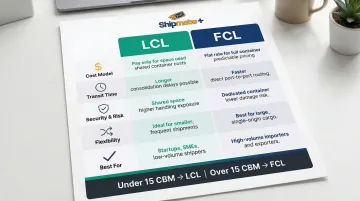
Decision Scenarios
Scenario 1: Small business shipping 3 CBM of apparel samples
LCL is the right call here. With only 3 CBM, you'd be paying for 37+ unused cubic meters in a 20-foot container. LCL lets you pay only for the space you use, potentially saving thousands of dollars. The longer transit time is acceptable for samples that aren't time-critical.
Scenario 2: Business shipping 20 CBM of furniture
FCL makes more sense at this volume. You're filling half of a 40-foot container, and the per-CBM cost of LCL typically exceeds the flat rate for FCL at this scale. FCL also offers faster transit, reduced handling, and better security for fragile or high-value cargo.
Scenario 3: Business with a tight 2-week delivery deadline
Go with FCL or air freight. The 1-2 week consolidation delay of LCL creates real risk when you're working against hard deadlines. Even if your volume is only 8 CBM, FCL's guaranteed departure date or air freight's speed may be worth the premium to ensure on-time delivery.
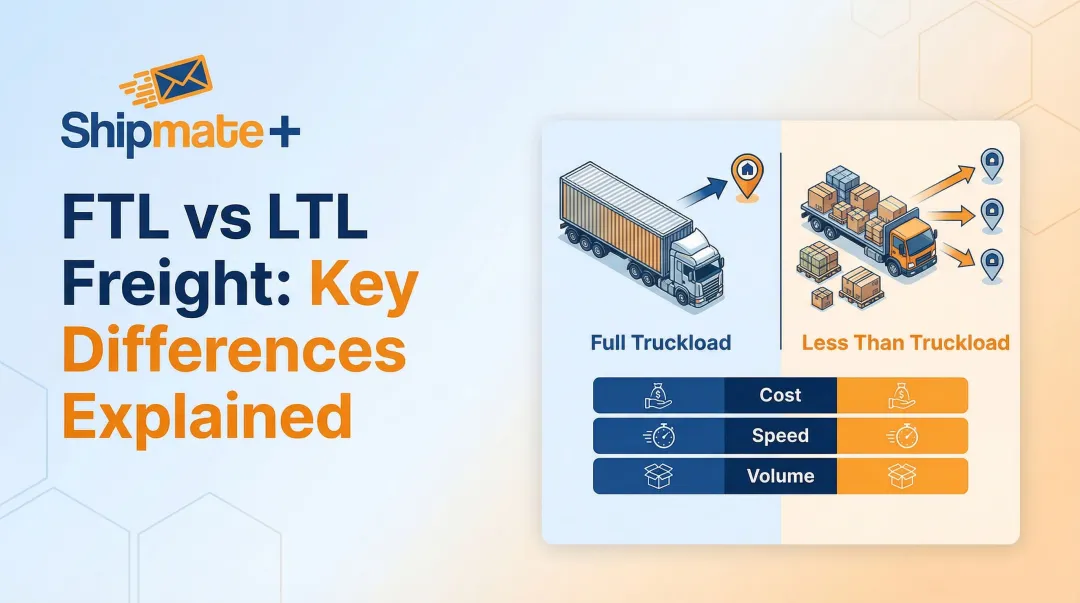
LCL vs. LTL: Understanding the Difference
LTL (Less than Truckload) is the road-freight equivalent of LCL — multiple shippers sharing truck space. The two terms serve similar functions but apply to different freight modes:
- LCL: Used for ocean (and intermodal) freight containers; billed primarily by CBM
- LTL: Used for domestic road freight; billed based on weight, dimensions, and freight classes
For purely domestic U.S. shipments, LTL serves the same function that LCL does for international ocean freight.
How ShipMate+ Can Help You Ship Smarter
ShipMate+ is an independently owned pack and ship store in Vista, CA, authorized by FedEx, UPS, and USPS. For individuals and businesses preparing LCL shipments, the store offers multi-carrier access and hands-on packing support — two things that matter most before cargo enters a freight network.
Professional Packing for LCL Success
LCL shipping success starts before cargo ever reaches the port. Proper packing is critical when cargo will be consolidated, handled multiple times, and transported across international legs.
ShipMate+'s professional packing team ensures items are securely packed to withstand the rigors of the LCL consolidation process, reducing damage and claims. The team provides:
- Expert guidance on commercial packaging, palletizing, and crating
- Guaranteed insurability for professionally packed items
- Custom packaging solutions for irregular or fragile inventory
- Access to heavy-duty materials including double-wall boxes, bubble wrap, and industrial-strength tape
Multi-Carrier Shipping Solutions
ShipMate+ offers key advantages for shippers preparing LCL cargo or navigating multi-carrier shipping decisions:
- Compare FedEx, UPS, USPS, and over 40 freight, LTL, air cargo, and sea container carriers under one roof
- Staff help you determine the most cost-effective shipping path for your cargo
- Open Monday–Friday 9AM–6PM, Saturday 9AM–1PM
- Located at 1929 W Vista Way Suite F, Vista, CA 92083
Call (760) 295-1074 or email info@shipmateplus.com to discuss your LCL shipment before it enters the freight network.
Frequently Asked Questions
What does LCL mean in shipping?
LCL stands for Less than Container Load, a method where multiple shippers share space in a single ocean freight container. Each shipper pays only for the cubic meters or weight their cargo occupies, not the entire container.
How much does LCL shipping cost?
LCL costs vary based on shipment volume (CBM), trade lane, carrier, and additional fees including CFS handling, documentation, and customs clearance. Always request a fully itemized quote to understand your total landed cost, not just the base freight rate.
How are LCL shipping charges calculated?
LCL charges are based on CBM (cubic meters) or actual weight—whichever is greater—plus surcharges at origin, destination, and for customs clearance. Carriers typically apply a minimum charge of one freight ton.
What's the difference between LCL and FCL?
LCL shares a container with multiple shippers (paying per CBM), while FCL dedicates an entire container to one shipper (paying a flat container rate). FCL typically becomes cost-competitive when shipments approach or exceed around 15 CBM.
Which is better, LCL or FCL?
Neither is universally better—it depends on your shipment size and timeline. LCL works well for smaller or less frequent cargo; FCL is the stronger choice for large, time-sensitive, or high-value shipments that need minimal handling.
Is LCL the same as LTL?
No. LCL and LTL follow the same shared-space concept but apply to different modes. LCL covers ocean freight containers and is billed by CBM. LTL applies to domestic road freight, where you share a truck trailer and pay by weight and freight class.