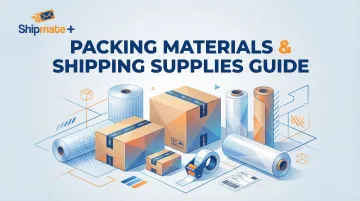
Introduction: Why the Right Packing Materials Matter
The packing materials you choose determine whether your package arrives safely—and how much you spend getting it there. Industry data shows up to 11% of unit loads arrive at distribution centers with some level of case damage, most of it caused by improper packaging.
The most common problems are predictable:
- Damaged goods from inadequate cushioning
- Oversized boxes that trigger dimensional weight surcharges
- Packages rejected by carriers due to improper sealing
Choosing the wrong poly mailer for a fragile item—or skipping the H-taping method—can turn a simple shipment into a costly insurance claim.
This guide covers the main types of packing materials, how to choose the right ones for your shipment, eco-friendly alternatives that match traditional performance, and where to get quality supplies at fair prices in Vista, CA.
TLDR:
- Single-wall boxes work for items under 65 lbs; double-wall for heavier or fragile shipments
- Bubble wrap, packing peanuts, and paper fill prevent damage—use 3 inches of cushioning for fragile items
- Poly mailers save money on soft goods but never use them for anything crushable
- Eco-friendly starch peanuts and honeycomb paper match or beat traditional plastics on cushioning
- ShipMate+ in Vista, CA offers discounted supplies and professional packing in one convenient stop
Types of Packing Materials: A Complete Overview
Knowing what's available helps you make better choices before you ever tape a box shut. The right materials protect your items, keep shipping costs down, and ensure carrier acceptance.
Boxes and Mailers
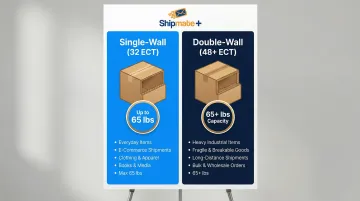
Corrugated Cardboard Boxes: Box strength is measured by the Edge Crush Test (ECT) rating — how much weight the box can support when stacked. Two constructions cover most shipping needs:
- Single-wall (32 ECT): Suitable for everyday items up to 65 lbs—standard e-commerce shipments, clothing, books, and lightweight goods
- Double-wall (48+ ECT): Required for heavy items over 65 lbs, fragile goods needing extra protection, or shipments traveling long distances
Always check the Box Maker's Certificate (BMC) printed on the bottom flap to verify the maximum gross weight limit. Exceeding this limit voids carrier liability and risks box failure during transit.
Poly Mailers: Lightweight, water-resistant plastic envelopes designed for soft, non-fragile items — clothing, fabric, and documents. FedEx recommends a minimum 3 mil thickness for items under 5 lbs. E-commerce sellers favor them because they cut shipping weight and costs compared to boxes.
Critical limitation: Never use poly mailers for anything that could be crushed, bent, or broken—electronics, glassware, ceramics, or rigid items all require boxes with cushioning.
Rigid Mailers: Cardboard envelopes with stiff backing keep documents, photos, certificates, and artwork flat during shipping. Mark these with "Do Not Bend" labels and consider adding a plastic sleeve inside for moisture protection.
Cushioning and Void Fill Materials
Once you've chosen the right box or mailer, what goes inside determines whether your item arrives intact.
Bubble Wrap: Bubble wrap comes in two sizes with different protection roles:
- Small bubble (3/16"): Provides surface protection for delicate items—wraps around glassware, picture frames, and small electronics to prevent scratches
- Large bubble (1/2"): Offers shock absorption for heavier items and fills voids around products in boxes
Wrap each fragile item individually, using 2-3 layers for maximum protection. Secure with tape at the seam, not on the item itself.
Packing Peanuts: Loose-fill foam pieces cradle items and absorb impact inside boxes. They're best for filling large empty spaces around items, preventing shifting during transit. Use at least 2 inches of peanuts on all sides, and slightly overfill to account for settling.
Limitation: Traditional EPS (polystyrene) peanuts create static electricity that can damage electronics and allow heavy items to migrate through the fill material.
Other Void Fill Options:
- Crumpled packing paper: Eco-friendly alternative that must be tightly crumpled; use at least 2 inches between contents and box walls
- Foam sheets/rolls: Custom-cut protective wrapping for odd-shaped items
- Air pillows: Lightweight void fill for non-fragile items without sharp edges; extreme temperatures can affect their protective ability
Sealing and Labeling Supplies
Choosing the right cushioning only matters if the box stays sealed. These supplies finish the job.
Packing Tape: Carriers explicitly prohibit masking tape, cellophane tape, and duct tape for shipping boxes. Use only pressure-sensitive plastic tape, water-activated paper tape, or nylon-reinforced filament tape that is at least 2 inches wide.
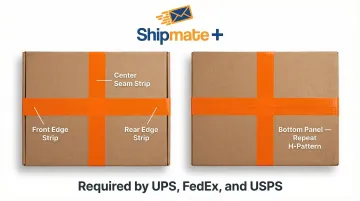
H-Taping Method: Apply tape across the center seam and both edge seams on the top and bottom, forming an "H" shape. This prevents mid-transit blowouts and box failure — and it's what carriers expect to see.
Tape Guns: Tape dispensers cut packing time roughly in half for anyone shipping regularly.
Labels and Markers: Place shipping labels on the largest flat surface, avoiding seams and edges. Maintain a 1/8" clear zone above and below barcodes to ensure scanner readability. Always include a duplicate label inside the box in case the exterior label is damaged during transit.
Choosing the Right Packing Materials for Your Shipment
The right materials depend on four key factors: what you're shipping, how fragile it is, the package weight and size, and carrier requirements. Matching materials to these factors prevents damage and avoids costly shipping mistakes.
Fragile Items
Fragile items require strict adherence to clearance rules. While the "2-inch rule" applies to standard shipments, FedEx explicitly mandates 3 inches (8 cm) of cushioning and a box-in-box method for fragile items.
Layered Protection Approach:
- Start with a sturdy double-wall box (48+ ECT rating)
- Wrap each item individually in 2-3 layers of bubble wrap, securing at the seam
- Place wrapped items in a smaller inner box with packing peanuts or crumpled paper filling all voids
- Center the inner box inside a larger outer box with 3 inches of cushioning on all six sides
- Apply the shake test: Gently shake the sealed box — if you hear or feel movement, add more cushioning
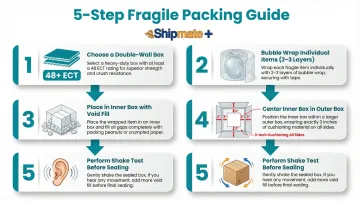
Items must never touch the outer box walls. When items migrate and contact the corrugated surface, external shocks transfer directly to the product, bypassing cushioning entirely.
Professional Packing Option: For especially fragile or high-value items, professional packing is worth considering. ShipMate+ in Vista, CA offers professional packing services where experienced packers handle this for you, with items guaranteed for insurability — reducing the risk of damage claims and ensuring carrier coverage eligibility.
Not every shipment needs that level of protection, though. Soft goods and documents call for a completely different approach.
Clothing, Soft Goods, and Documents
Non-breakable, soft items don't need rigid boxes or heavy cushioning. Poly mailers are the most cost-efficient option and keep shipping weight low, saving money on carrier charges.
Best Practices:
- Use 3 mil poly mailers for clothing, fabric, and soft textiles under 5 lbs
- Fold items neatly to minimize package dimensions (smaller size = lower dimensional weight charges)
- Seal the adhesive strip completely and add packing tape across the closure for extra security
For Documents and Photos:
- Use rigid cardboard mailers with stiff backing to prevent bending in transit
- Mark packages clearly with "Do Not Bend" labels
- Add a plastic sleeve inside for moisture protection on certificates or photographic prints
Heavy or Oversized Items
Heavy items over 65 lbs need double-wall corrugated boxes (48+ ECT minimum) and strong packing tape applied in an H-pattern on both top and bottom. Corrugated board loses 40% of its strength within the first 30 days of storage and is 71% weaker at 95% humidity, so box condition matters as much as construction.
Weight Limits by Box Construction:
- Single-wall 32 ECT: Maximum 65 lbs
- Single-wall 44 ECT: Maximum 95 lbs
- Double-wall 48 ECT: Maximum 100 lbs
- Double-wall 61 ECT: Maximum 140 lbs
Never exceed the Box Maker's Certificate (BMC) weight limit printed on the bottom of boxes.
Dimensional Weight Pricing: Carriers calculate dimensional (DIM) weight by dividing cubic volume (length × width × height in inches) by a divisor — typically 139 for FedEx/UPS daily rates or 166 for USPS and retail rates. A box just one inch too large can bump a shipment into a higher weight class, costing significantly more.
Example: A box measuring 21×20×20 inches = 8,400 cubic inches ÷ 139 = 60.43 lbs, billed as 61 lbs regardless of actual weight. Choosing the smallest box that safely fits your item is essential for keeping shipping costs in check.
Eco-Friendly Packing Alternatives
Eco-friendly packing is gaining traction due to growing consumer demand for sustainable practices and aggressive regulatory action against non-recyclable materials. California's SB 54 now prohibits EPS (polystyrene) foam food service ware after producers failed to meet a 25% recycling threshold, and numerous local jurisdictions have banned EPS packing peanuts entirely.
Main Sustainable Alternatives:
- Starch-Based Packing Peanuts — Made from corn or potato starch, these dissolve in water, carry ASTM D6400 compostability certification, and are anti-static (safe for electronics).
- Honeycomb Paper Wrap — Up to 60% more protective than plastic bubble wrap in drop tests, 100% curbside recyclable, and free of plasticizers that can damage antique or varnished surfaces.
- Recycled Packing Paper — Crumpled kraft or shredded paper works well for lighter items; layer at least 2 inches thick on all sides for adequate cushioning.
- Kraft Paper Tape — Water-activated kraft tape (minimum 60-lb grade) bonds directly to corrugated cardboard and recycles with the box—no removal needed, unlike plastic tape.
- Corrugated Bubble Wrap — Made from recycled cardboard; best for surface protection on items that don't need heavy-duty shock absorption.
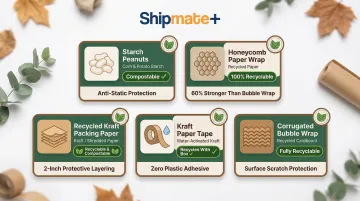
These materials are widely stocked and priced competitively with their plastic counterparts—meaning the switch to sustainable packing doesn't require a tradeoff on cost or protection.
Packing Tips to Keep Shipments Safe in Transit
Avoiding common packing mistakes prevents damage claims and ensures carrier acceptance. Small errors in technique can turn into expensive problems during transit.
Most Common Packing Mistakes:
- Reused boxes lose structural integrity after one trip and are significantly weaker — collapse is a real risk
- Leaving empty space inside lets contents shift and slam against box walls, causing breakage
- Stuffing boxes until they bulge compromises the corrugated structure and risks seam failure
- Masking tape, cellophane tape, and duct tape fail under pressure and humidity — carriers reject packages sealed with these
The Shake Test: After sealing a box, gently shake it near your ear. If you hear or feel movement inside, add more void fill before final sealing. This simple 5-second test catches most cushioning issues before they become damage claims.
Label Management for Reused Boxes: Once the contents are secure, the outside of the box needs equal attention. Carriers permit box reuse only if they're in excellent condition with no punctures, tears, or corner damage. Black out all old shipping labels, barcodes, and hazardous materials indicators to prevent automated routing errors — leftover barcodes frequently send packages to the wrong destination.
Duplicate Label Inside: Always include a duplicate shipping label or address information inside the box. If the exterior label is torn off or damaged during transit, carriers can open the package and use the internal label to complete delivery.
Proper Cushioning Placement: Wrap items individually and center them within the box, keeping each item clear of the sides, corners, top, and bottom. Use at least 2 inches of cushioning for standard items, 3 inches for fragile goods.
Where to Get Packing Supplies in Vista, CA
Buying packing supplies locally offers advantages over big-box retailers: better-quality materials designed for shipping (not just storage), expert advice from experienced staff, and often discounted pricing on commonly used items.
ShipMate+ in Vista, CA carries a wide range of packing supplies at discounted prices, including over 20 box sizes in single-wall and double-wall construction, plus specialty options for artwork, laptops, and furniture. Bubble wrap is available by the foot or full roll, alongside packing peanuts, heavy-duty poly tape, tape guns, mailing tubes, and padded envelopes.
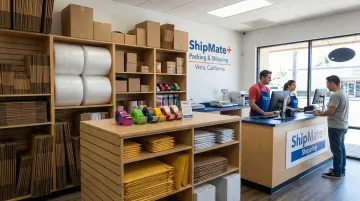
Beyond supplies, ShipMate+ is an authorized drop-off location for FedEx, UPS, and USPS — so you can buy what you need and ship in one stop. Extended hours Monday through Friday (9 AM–6 PM) make that easy for working professionals.
Key reasons locals choose ShipMate+ for packing supplies:
- Professional packing available for fragile or high-value items, with guaranteed insurability under carrier requirements
- Custom box-making for oddly sized items that standard boxes won't fit
- Bundle pricing on larger orders — useful for e-commerce sellers and businesses shipping in volume
Contact Information:
- Address: 1929 W Vista Way Suite F, Vista, CA 92083
- Phone: (760) 295-1074
- Email: info@shipmateplus.com
- Hours: Monday–Friday 9 AM–6 PM, Saturday 9 AM–1 PM
Frequently Asked Questions
What are the different types of packing materials?
Packing materials fall into three main categories:
- Outer packaging: corrugated boxes, poly mailers, rigid mailers
- Cushioning: bubble wrap, packing peanuts, foam sheets, crumpled packing paper
- Sealing & labeling: pressure-sensitive tape, tape guns, shipping labels
What can I use instead of bubble wrap?
Good alternatives include crumpled packing paper, foam sheets, biodegradable starch peanuts, corrugated cardboard inserts, and honeycomb paper wrap. Household items like towels work in a pinch but compress too easily and won't satisfy carrier requirements for insurance claims.
What is a poly mailer?
A poly mailer is a lightweight, flexible plastic envelope used to ship soft, non-fragile items like clothing and fabric. It's water-resistant, significantly cheaper than boxes, and reduces shipping weight to lower carrier charges—but should never be used for anything crushable or breakable.
What are packing peanuts used for?
Packing peanuts are loose-fill cushioning material that surrounds items inside a shipping box. They absorb impact during drops and prevent contents from shifting in transit.
Why are packing peanuts used less often now?
Traditional foam packing peanuts are made from polystyrene (EPS), which is not recyclable in curbside programs and persists in landfills for 500+ years. Regulatory bans like California's SB 54 and growing environmental concerns have led many businesses and consumers to switch to biodegradable starch-based alternatives.
Are packing peanuts safe to eat?
Traditional polystyrene packing peanuts are not safe to eat and pose a choking hazard. Biodegradable starch-based peanuts are non-toxic and dissolve in water, but neither type is intended for consumption.