
Introduction
Freight quotes are the starting point for any shipment—whether you're sending a pallet, an oversized item, or a large package across the country. Getting an accurate quote upfront can mean the difference between a smooth delivery and an unexpected bill that blows your budget by hundreds of dollars.
Most pricing disputes between shippers and carriers trace back to inaccurate information at the quoting stage—not carrier errors. Understating weight, rounding down dimensions, or missing accessorial charges like liftgate delivery can trigger carrier inspections and invoice corrections that push your final cost 30-40% above the original quote.
This guide covers what you need to get an accurate freight quote:
- What information carriers require before quoting
- How to request and compare quotes across multiple carriers
- Which variables move the price (and by how much)
- Common mistakes that lead to paying more than quoted
Key Takeaways
- A freight quote estimates total cost based on weight, dimensions, freight class, origin, and destination
- Accurate shipment details are essential—guessing leads to billing corrections after delivery
- Freight class directly affects your rate—misclassifying a shipment can significantly change what you pay
- Multi-carrier shipping centers, freight brokers, and carrier portals are the three main ways to get a quote
- Comparing rates across FedEx, UPS, and USPS helps you avoid overpaying on every shipment
What Is a Freight Quote?
A freight quote is a cost estimate provided by a carrier or shipping service based on your shipment details. It breaks down base rates, fuel surcharges, and any accessorial fees before you commit to shipping.
Quote vs. Binding Rate Confirmation
A freight quote is a non-binding, preliminary estimate. According to carrier tariffs from FedEx and TForce Freight, these quotes are approximations — carriers calculate final billable charges based on their published tariff in effect at the time of shipment. Inaccurate information at the quoting stage is the most common reason final bills exceed the quoted price.
For a guaranteed price on LTL shipments, you need a binding rate confirmation (rate con) — a formal, legally binding contract that fixes the price and terms for a specific load. Once signed, it supersedes any prior estimates.
Quote Validity Periods
Freight quotes have expiration dates that vary by carrier and market conditions:
- FedEx: Volume Service binding quotes include a specific effective date range; standard online quotes are non-binding
- UPS: Air Freight rate quotes are valid for 30 days when you reference the rate confirmation number
- USPS: Uses published price lists with set effective dates rather than time-limited quotes
During peak seasons, rates and surcharges shift quickly — always confirm your quote is still valid before booking.
What You Need Before Requesting a Freight Quote
Having complete, accurate information before requesting a quote is what separates a reliable estimate from a number that changes at billing. Here's what you need to gather:
Package Dimensions and Weight
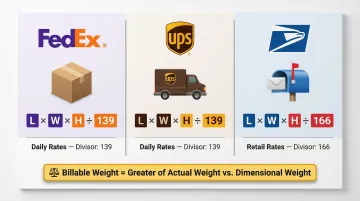
Measure length, width, and height in inches and weigh the package accurately. Carriers charge based on either actual weight or dimensional weight, whichever is greater.
Dimensional weight calculation:
- FedEx: (Length × Width × Height) ÷ 139
- UPS: (Length × Width × Height) ÷ 139 for daily rates, ÷ 166 for retail rates
- USPS: (Length × Width × Height) ÷ 166 for USPS Retail Ground
Round measurements to the nearest whole inch before calculation. Any fraction of a pound in the final calculated weight is rounded up to the next whole pound. Even small measurement errors can shift your billable weight into a higher pricing tier.
Freight Class (for LTL Shipments)
LTL freight is classified using an NMFC freight class ranging from Class 50 (least expensive) to Class 500 (most expensive). The class is determined by four characteristics:
- Density: Weight per cubic foot (lbs/pcf)—higher density = lower class = lower cost
- Stowability: How easily the item can be loaded with other freight
- Handling: Ease of loading/unloading and any special equipment required
- Liability: Risk of damage, theft, or damage to other freight
Industry Shift to Density-Based Classification
The National Motor Freight Traffic Association (NMFTA) has implemented "Classification Reimagined," a multi-year initiative shifting the NMFC system toward density-based standards. Changes effective July 19, 2025, expanded the density scale from 11 to 13 subprovisions, making density a more precise and primary factor.
This means accurate per-handling-unit dimensions and weight are now essential. Record exact dimensions on every bill of lading — quotes based on inaccurate data will likely be reclassified by carriers, leading to back charges.
Selecting the wrong class is the most frequent cause of post-delivery invoice corrections. Carriers can inspect and reclassify shipments, applying inspection surcharges (for example, $40 from FedEx Freight) if the declared class doesn't match the actual shipment.
Origin and Destination Details
Full pickup and delivery addresses are required. Specific location types affect pricing:
- Residential vs. commercial delivery: Residential addresses trigger surcharges ($5.65-$6.20 per package for UPS, $243 per shipment for FedEx Freight)
- Liftgate requirements: Locations without loading docks need liftgate service ($75-$207 minimum)
- Limited-access locations: Schools, construction sites, churches, and similar locations add $85-$229 per shipment
Shipment Value and Special Handling Needs
Declared value affects carrier liability coverage costs. Special handling requirements change the quote:
- Hazardous materials
- Fragile items
- Temperature-sensitive goods
- Items requiring inside delivery or white glove service
Desired Service Level and Timeline
Transit speed directly affects cost. Define your priority before requesting quotes:
- Standard ground: Most economical, 1-5 business days
- Expedited: Faster transit, higher cost
- Overnight freight: Premium pricing for time-critical shipments
How to Get a Freight Quote: Step by Step
Each step below builds on the last. Skip one, and you risk a quote that looks good on screen but comes back higher on the invoice.
Step 1: Gather and Verify Your Shipment Details
Document all package or pallet measurements, weight, commodity description, and delivery requirements accurately before starting. This information is entered identically across every quote request to ensure an apples-to-apples comparison.
Verification checklist:
- Measure and weigh the packed shipment (not just the contents)
- Calculate dimensional weight to determine billable weight
- Identify freight class for LTL shipments using density and NMFC guidelines
- Note any special handling requirements
- Confirm full origin and destination addresses including location type
Step 2: Choose Your Quoting Method
Three main ways to request a freight quote:
1. Directly on a carrier's website:
- FedEx, UPS, and USPS offer online quoting tools
- Requires creating separate accounts for each carrier
- You manually compare rates across carriers
2. Through a freight broker or online marketplace:
- Aggregates rates from multiple carriers in one place
- Useful for LTL and specialized freight
- May charge broker fees
3. In person at an authorized multi-carrier shipping center:
- Staff pull and compare quotes from FedEx, UPS, and USPS simultaneously
- No need to manage multiple portals
- Expert guidance on service level selection
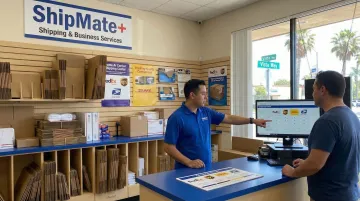
ShipMate+ in Vista, CA operates as a FedEx Authorized ShipCenter, UPS Authorized Shipping Outlet, and USPS Approved Shipper. Staff can compare rates across all three carriers at once and walk you through the right service level for your shipment. For oversized or heavy freight, ShipMate+ also has access to over 40 freight, LTL, and air cargo carriers — reach them at (760) 295-1074 for a free quote.
Step 3: Enter Shipment Information and Compare Rates
Enter the following details into any quoting tool or provide them to a shipping agent:
- Origin and destination zip codes
- Package weight and dimensions
- Freight class (if applicable)
- Service type (ground, express, overnight)
- Special handling requirements
Every field must be filled accurately to avoid post-shipment corrections. Small errors compound: rounding down on dimensions can shift billable weight into a higher tier, and omitting a liftgate requirement can add $75–$207 to your final bill.
Step 4: Review the Quote Breakdown Before Committing
The lowest headline number is not always the lowest total cost once all surcharges are added. Look for:
- Base rate: Core transportation charge
- Fuel surcharge: Weekly-adjusted percentage (25–50% of base rate)
- Residential delivery fees: $5.65–$243 depending on carrier and service
- Liftgate charges: $75–$207 minimum
- Limited-access fees: $85–$229 per shipment
- Inside delivery: $100–$189 minimum
- Appointment/notification fees: $30–$155 per shipment
Key Factors That Affect Your Freight Quote
Freight pricing is built from multiple compounding variables. Each one affects your final quote — and knowing them helps you catch errors before they hit your invoice.
Weight and Dimensions (Billable Weight)
Carriers calculate billable weight as the greater of actual weight vs. dimensional weight. A light but bulky item can be priced as if it weighs far more.
Example: A package measuring 24" × 24" × 24" weighing 30 lbs:
- Dimensional weight (FedEx): (24 × 24 × 24) ÷ 139 = 99 lbs
- Billable weight: 99 lbs (dimensional weight is greater)
Even small measurement errors can shift billable weight into a higher pricing tier. Rounding down dimensions from 24.5" to 24" might seem minor, but it can reduce your dimensional weight calculation enough to change the rate.
Freight Class
Higher freight classes correspond to more difficult-to-ship goods and higher rates. A reclassification from Class 70 to Class 100 can push costs well beyond what you quoted.
Real-world example from FedEx Freight tariff (Zone 101, 950 lbs):
- Class 70: Final base rate = $762.30
- Class 100: Final base rate exceeds $762.30 (higher rate per hundredweight)
Carriers can inspect and reclassify shipments. If the declared class doesn't match the actual shipment, they apply an inspection surcharge ($20-$40) plus the higher freight charges.
Distance and Lane Demand
Base freight rates increase with distance, but lane-specific demand and carrier capacity on certain routes cause rates to spike. A cross-country shipment during peak season may cost significantly more than the same lane in off-peak months.
Fuel surcharges compound this further — they're calculated as a percentage of the base rate and fluctuate weekly based on fuel index prices:
- FedEx Freight: 49.50% (week of March 25-31, 2026)
- UPS Ground: 25.25% (week starting March 30, 2026)
These surcharges are not fixed at quote time and can change before your shipment date.
Accessorial Charges
Common accessorial fees that inflate quotes:
| Service | FedEx Freight | UPS (Parcel) | Estes Express |
|---|---|---|---|
| Residential delivery | $243/shipment | $5.65-$6.20/pkg | N/A |
| Liftgate service | $207 min | N/A | $75 min |
| Inside delivery | $189 min | N/A | $100 min |
| Limited-access location | $229/shipment | N/A | $85/shipment |
| Appointment/notification | $65/shipment | N/A | $30/shipment |
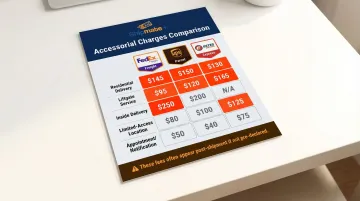
These fees are often not included in an initial online quote and appear as line items on the final invoice if not pre-declared.
Common Mistakes That Inflate Your Freight Quote
Most pricing disputes stem from avoidable errors at the quoting stage—not carrier errors.
Guessing on Weight, Dimensions, or Freight Class
Under-declaring weight or selecting a lower freight class to get a cheaper quote almost always results in a carrier inspection, reclassification, and an adjusted invoice. With carriers' use of advanced dimensioning technology, even small inaccuracies trigger reweighs.
Consequences:
- Weight increase of 50+ lbs triggers a $40 reweigh fee (FedEx)
- Freight class reclassification adds inspection charges plus higher rates
- Some shippers experience re-rating on 25-30% of their shipments
Ignoring Accessorial Fees
Shippers frequently focus only on the base rate and overlook residential delivery fees, liftgate requirements, or limited-access charges.
Industry data:
- Accessorial charges account for an average of 8.7% of total LTL spend (up from 6.1% historically)
- For some shippers, accessorials reach 20% of total spend
- One shipper accumulated $120,000 in unexpected overlength fees before identifying the issue
Real-world example: A shipment quoted at $250 ballooned to an $800 bill due to overlooked accessorial fees—a 220% increase from the original quote.
Requesting Only One Quote
Rates vary considerably between carriers on the same lane and service level. Comparing only one carrier means you often pay more than necessary.
A multi-carrier comparison at the quote stage is one of the simplest ways to cut shipping costs. Local shipping centers like ShipMate+ in Vista, CA make this easy — pulling quotes from FedEx, UPS, and USPS side by side so you can choose the best rate without juggling multiple portals or accounts.
Frequently Asked Questions
What is a freight quote?
A freight quote is an itemized cost estimate from a carrier or shipping service based on shipment details like weight, dimensions, origin, destination, and service type. It serves as the starting point before booking a shipment but is typically non-binding unless formalized as a rate confirmation.
How do you calculate a freight quote?
Carriers calculate freight quotes using billable weight (the greater of actual vs. dimensional weight), freight class for LTL shipments, the distance between origin and destination, current fuel surcharges, and any applicable accessorial fees. The combination of these variables determines your final estimate — which is why accurate shipment data matters from the start.
How to get the best freight quote?
The best freight quote comes from comparing multiple carriers with accurate shipment data. Using an authorized multi-carrier shipping center or freight comparison tool gives you a full picture of available rates instead of a single carrier's pricing. Contact ShipMate+ at (760) 295-1074 for free multi-carrier quote comparisons.
What information do I need to get a freight quote?
You need package dimensions (length, width, height), actual weight, origin and destination addresses, commodity description, freight class (for LTL), declared value, and any special handling requirements like liftgate or residential delivery. Accuracy in all fields is critical to avoid invoice adjustments.
Why is my final freight bill different from my quote?
Bill adjustments happen when the actual shipment doesn't match the quoted details — most often due to weight discrepancies, freight class reclassification, or undeclared accessorial services like liftgate delivery. Carriers typically apply reweigh fees ($25–$40) and inspection charges when corrections are made.
How long is a freight quote valid?
Most quotes are valid for 24 hours to 30 days depending on the carrier — UPS Air Freight quotes last 30 days, while FedEx Volume Service rates include a specific effective date range. Always confirm the expiration date before committing, especially when market rates are shifting.